maandag 5 november 2012

The 2000 year old coppiced lime tree

Located in the Westonbirt Arboretum is a Lime tree that is over 2000 years old and that managed to reach its respectable age by a 25-year-coppice cycle. The picture above is all one tree. I Learned about this via Rob Penn's current BBC4 program Tales from the Wild Wood in which he takes under his care a neglected Welsh woodland. 


zondag 28 oktober 2012

Plant circumnutation [plant growth trajectories with Mr Charles Darwin]

Cassia corymbosa: A, plant during day; B, same plant at night.

Charles Darwin is usually only known for his theoretical work (which arguable remain of some significance) but he was also an experimentalist who worked on barnacles and earthworms with meticulous care and for extended periods of time. Another subject he took on is the movement of plants. Below are trajectories of the circumnutation of various plants. Yes I needed to look that up as well: "cicumnation: The successive bowing or bending in different directions of the growing tip of the stem of many plants, especially seen in climbing plants." It looks neat though, like GPS tracks, and the accompanying explanations, like the following, add to the flavour. Who could have though that plants grow with such sense of exploration.
Brassica oleracea: circumnutation of radicle, traced on horizontal glass, from 9 A.M. Jan. 31st to 9 P.M. Feb. 2nd. Movement of bead at end of filament magnified about 40 times.

 Brassica oleracea: conjoint circumnutation of the hypocotyl and cotyledons during 10 hours 45 minutes. Figure here reduced to one-half original scale.

Pinus pinaster: circumnutation of young leaf, traced from 11.45 A.M. July 31st to 8.20 A.M. Aug. 4th. At 7 A.M. Aug. 2nd the pot was moved an inch to one side, so that the tracing consists of two figures. Apex of leaf 14 1/2 inches from the vertical glass, so movements much magnified.

Sida rhombifolia: circumnutation and nyctitropic (or sleep) movements of a leaf on a young plant, 9 1/2 inches high; filament fixed to midrib of nearly full-grown leaf, 2 3/8 inches in length; movement traced under a sky-light. Apex of leaf 5 5/8 inches from the vertical glass, so diagram not greatly enlarged.

Averrhoa bilimbi: angular movements of a leaflet during its evening descent, when going to sleep. Temp. 78° - 81° F.

Oxalis carnosa: movements of flower-peduncle, traced on a vertical glass: A, epinastic downward movement; B, circumnutation whilst depending vertically; C, subsequent upward movement, due to apogeotropism and hyponasty combined.


zaterdag 27 oktober 2012

Three new drawings by my 4 1/2 year old

A man in a circus doing tricks
A little man inside the head of a crododile

A story about a monkey in a place far away from here [inspired by the Apenheul monkey zoo]

dinsdag 23 oktober 2012

Elephant trails as the highway of the hunter-gatherer


Human migration as a kind of elephant tourism? Actual hard evidence is maybe a bit wanting but Gary Haynes makes an interesting suggestion on how (prehistoric) hunter-gatherer are aided in their exploration of their environment by the landscape management of several elephantine species in past and present times. Read his papers 'Mammoth landscapes: good country for hunter-gatherers' and 'Elephant landscapes: human foragers in mammoths, mastodonts, and elephants'. For elephant trails as desire trails see earlier.
Studies of elephants in the wild show clearly that proboscideans make complex mental maps of water points, mineral sources, forage patches, fruit trees, travel routes, and socializing sites. My own studies confirm that travel routes between these important places can be effortlessly found by human foragers and other animal taxa. Proboscidean trails are well used, clearly identifiable, and easy to follow. They tend to be flat surfaced (because elephants have flat feet and great weight which compresses the ground so much), measure about 45 cm wide or more, and are consistently placed year to year. Human hunters or scavengers would have recognized these trails, read the signs to be found on them, and made use of them to track and follow vulnerable animals moving from water source to forage to cover to mineral licks and back again.

The modern literature on African and Asian elephants shows that they frequently move long distances, exploring for new forage, new mates, or new ranges. Proboscideans also habitually re-use old trails seasonally or more often, thus establishing clear networks of widely separated places connected by paths. Such networks of fixed and dependable trails would provide a means to encourage exploratory mobility by human pioneers into new ranges.
Mineral pit dug by elephants

maandag 15 oktober 2012

Pointing you to an important paper on edible wild plants

"lacto-fermented hogweed soup (+eggs): the original borscht"
Nancy Turner and six co-authors wrote "Edible and Tended Wild Plants, Traditional Ecological Knowledge and Agroecology" a very readable look on the possible importance of weedy plants for food. It's hard to summarize the paper because there are no words wasted but if you are interested in the wider implications of foraging I advice you to read it. The crux of the matter is stated here:
Wild plant species, even for agrarian peoples or pastoralists who mainly used animal products, would have assumed a special importance during times of crop failure and famine. Some of these are the species that we know of today as “weeds”: species well adapted to disturbed conditions and often associatedwith human habitation. In turn, some of these weeds became the candidates for domestication: for example, mustards, wild carrot, chicory and lettuce. Altogether, widely used domesticated species comprise only a fraction of the 20,000 or so plant species known to have been used as food by humans. Canadian Indigenous peoples alone have used over 500 species of plants for food. In recent times, however, especially in urban areas of the world, most people have come to depend on fewer and fewer species to provide them with their daily nutrition. Today, only around 20 domesticated species supply up to 85% of the world’s food base.
What follows then is a ten page overview of selected edible wild plants from around the world as documented in scientific literature. That's an approximate 250 plants, way more than an average forage guidebooks will give you. The paper continues with various strategies for wild plant use and management before giving a very good definition of weeds, their downsides and upsides. It then continues by giving various examples of weeds used in local cuisines. I am quoting from the paragraph on Borsch:
Nowadays the Russian name borsh and Polish barszcz designate a kind of vegetable soup, specifically one made with beetroots (Beta vulgaris). However in the past this name applied mainly to a soup made from the young shoots of hogweed, or cow-parsnip (Heracleum sphondylium) which in Polish bears the name barszcz and in Russian barshchevnikh. How did it happen that this shift in the meaning of the name arose? This issue fascinated professor Jozef Rostafinski, a Polish botanist from Cracow, who in 1916 published a treatise on the history of the shift from eating Heracleum to eating beetroots. Hogweed is reported as an important food plant in Poland in the sixteenth century. In the herbal of Marcin z Urze¸dowa (1595) we can read: “Whoever eats hogweed, moistens his living.. . . When they make it sour in the Polish way, it is good to drink in fevers, thirst, as it alleviates thirst and cholera and it induces greed for food with its spice.. . . Garnished with egg and butter, it is good to eat on the days when they do not eat meat soup, as it works in the same way.”
Isn't that lovely? The paper ends with the observation that the traditional knowledge of gathering wild plants is mostly down to old women whose skills are not being handed down to a new generation. And this is a shame because with it we lose a local, practical, hands-on knowledge that appreciates diversity and gives independence and understanding of the environment to its practitioners.

donderdag 11 oktober 2012

Strange Berlin 2nd hand bookshop grid map

In a TV documentary on Hendrik Lenstra, the Dutch mathematician, the man travels to Berlin to deliver the Euler lecture. His main concern in Berlin however seems to be to visit as many 2nd hand bookshops he can (he collects old book because they smell better than modern ones). He prepares his visit carefully by plotting shops on a map to find those hotshots where there are several shops in close proximity. They way he does this puzzles me though. As a mere mortal I would find all shops on a topographic map. Lenstra has a different technique: he creates a grid matching the Letters and Numbers from the map register (shop one in E13, shop two in F8 and so on) and then draws lines to connect the E and 13. The result, to me, looks a bit confusing.

vrijdag 5 oktober 2012

Crannog Cryptoforestry


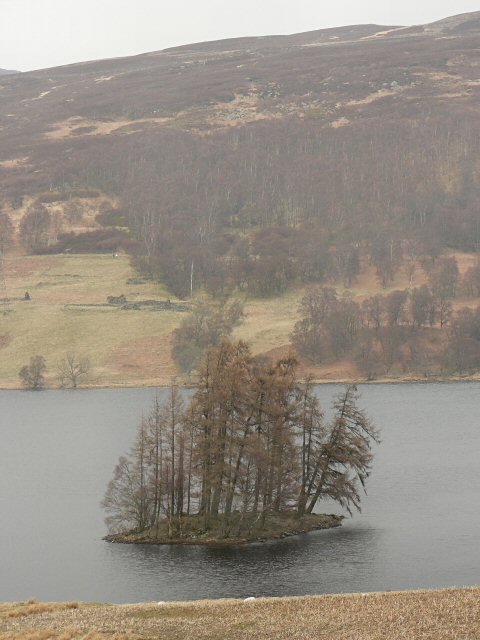
Crannog, Neolithic artificial island, found splattered across Ireland and Scotland in their hundreds. There is one in Wales too. Cryptoforests 1000 years after. Had prepared a post in which each picture had a source and a location, but Blogger ate the post and I can't be motivated to do it again. Therefore a quick roll call of sources: Scotland Places, Wikipedia, Graymonk, Education and Inchigeelach.

dinsdag 2 oktober 2012

Humanized monkey and wild Indians

From Gregor's book on Xingu's Mehinaku people (earlier); one image shows a humanized capuchin monkey and the other a Golemized wild Carib Indian. The wild Indian still appears more human than the monkey, but just barely.

zondag 30 september 2012

Amazonian garden dissected


In Charles C. Mann's '1493' (earlier) we find this glossed picture of an Amazonian garden in N.E. Brazil. It shows the detailed and intricate knowledge behind a good garden. 

dinsdag 25 september 2012

Mehinaku cartography [mapping the Xingu]


The Mehinaku are an indigenous Amazonian  people living in Xingu park. In his 1977 book 'The Mehinaku: The Drama of Daily Life in a Brazilian Indian Village' Thomas Gregor writes about them as if they were actors acting out their part. If life is a performance the village is a stage: "The Mehinaku village and its environs are a theatre for the enactment of everyday social relationships... The layout of the village and the architecture of the houses are simultaneously a spatial representation of Mehinaku social organization and a traffic pattern for the flow of information and interaction." If you say so! The images gives us something of everything: the village as a allusion to the cosmos, the mental map, the cognitive map, a cartoon and an areal picture.  We are always happy when can store up on some more ethnocartographic imagery. Click to Enlarge.  


"A Mehinaku view of everyday village life. When Amairi painted this he occasionally stopped to chuckle over his characterization of a particular villager."

maandag 24 september 2012

Plant: Wild or Not?


I discovered a plant in my street and a reader knew it's name: verbena bonariensis. The plant grew on its own in a small messy flowerbed but I have been noticing it everywhere as a garden plant. In fact it's probably the most fashionable plant of the season. However I have also discovered a few growing on a small untended plot overgrown with typical weedy species like primrose and blackberry, their distribution has the chaotic pattern of self-seeding. Wikipedia tells us that the purple top is native to South America and that it does spread with the wind. So what is the plant in my street? Is it wild (read escaped), planted or planted but forgotten by its gardener? Whatever the case: I am feeling all Gilbert White hot on the heels of a plant about to turn weed. 

dinsdag 18 september 2012

Our cities are places of conditional liberty

"The relationship between the Occupy movement and the city is intense. The taking of Zuccotti Park, as well as St Paul’s churchyard in London, revealed the secret dangers of allowing public spaces to be privately owned to this extent. Our cities have increasingly become places of conditional liberty –where you can be stopped from taking photographs, where legitimate gatherings are bustled off the pavement, where you can be thrown out of the shopping mall for wearing a baseball cap, where private companies are collecting data about you without you knowing.

By taking land back – even for a few weeks – the Occupy movement has changed the way we encounter every part of the city, not just where the tents once stood. The protest has become a defence of the whole public realm and is not just about preserving the memory of what happened at Zuccotti Park or St Paul’s churchyard alone."

Leo Hollis in the New Statesman

vrijdag 14 september 2012

Today Joe and Hannah would be refused at the border as unwanted aliens

Charles Hall with Joe and Hannah

"In 1853 a British whaling captain had persuaded an Eskimo couple, Tookolito and Ebierbing,to accompany him back to London. Over two years they had learned English, had adopted the mannerisms, dress and religion of their host nation and had become minor celebrities. They had been presented to Queen Victoria and had won the hearts of a society that revelled, as no other, in converting others to its own ways. When the novelty wore off they were sent to New York, where they created no less of a sensation. Then they were dropped back on Baffin Island complete with new names ('Joe' and 'Hannah') and a new wardrobe, to be forgotten save by passing whalers who sold them articles of western civilization to which they had become accustomed. " - 'Ninety Degrees North', Fergus Fleming, image from Northern Exposures]

maandag 3 september 2012

We know nothing of untamed Nature

"We know nothing of untamed Nature, because our own landscape is entirely subject to our needs and desires. If it sometimes strikes us as untamed, it is either because in our forests, for instance its changes operate to a slower rhythm; or because as in the mountains the problems were of such complexity that Man has tackled them in detail rather than in one systematic assault. Such coherence as has resulted from these innumerable individual initiatives now seems to share the original primitive character of the mountain-world, whereas in fact it is due to an interlocking chain of decisions and enterprises, each of which seemed at the time to be independent of the others. Yet even the wildest of European landscapes has something of order and proportion about it. (Poussin was the incomparable interpreter of this.) Walk among our mountains and you will notice the contrast between forest and bare slope, the relation between the forest and the meadows below it: and the variety of expression which comes about as first one kind of vegetation, and then another, dominates the scene Travel in America, and you will realize that this sublime harmony, far from being the spontaneous expression of Nature herself, is the result of agreements long sought for between mankind and the site in question. What causes us to gape, in all simplicity, are the traces of our bygone enterprise. " - Claude Levi-Strauss.

zondag 2 september 2012

5 out of 100 Wild Huts prospected


100 Wild Huts is Kevin Langan's ongoing project to: "build 100 small survival shelters on any piece of ground that harbours enough natural resources for the build. I intend to sleep rough in each shelter for one night and blog about the experiences." He is down to five so far and already the range of designs is impressive. When he is done the result with be catalogue for primitivist-survivalists looking for inspiration. Great stuff. Langan is a long distance walker with a 132km Highland walk guide book to his name.

The wild hut project came to me in an email by Felix Wilson (earlier) who has been helping a friend in constructing similar one-night huts. But not in Glasgow but in Tasmania. Ray Mears is to art in the 21th century what Marchel Duchamp was in the 20th century.