Posts tonen met het label cryptoforestry. Alle posts tonen

vrijdag 6 december 2013

Cryptoforestry: Psychogeography in the Anthropocene


“It has been suggested that nature is hostile, violent and unpredictable, and that the Indians try to bring order into this confusion by categorising it. This may be so in some cases and some societies, but from what we have learned from the Indians, it is man and his basic impulses: food, sex, power, security, which are chaotic and must be controlled, while nature, far from being disordered offers many practical models for human behaviour and adaptation.” - Gerardo Reichel-Dolmatoff[1]

Setting the Stage: A Walk

“Ladies and Gentleman, I welcome you all to today’s cryptoforestry walk. We have assembled here at a place on the edge of the city of Amsterdam. In the vicinity are three large tower blocks, all offices, a hotel, there are mass-parking facilities, tram and metro stations. There are also plenty of motorway junctions. A place like this is the utility area of a city, it provides the infrastructure that transport oxygen to the heart, i.e. the centre, of the city. It is an the uncelebrated landscape but for cryptoforestry this place is not just the essence of the city, its true grit, its face behind the mask, but it is also the place where the dirt is swept under the magic carpet.

‘Crypto’ from Greek meaning hidden or secret, related to ‘cryptic’, of unsure or obscure meaning. A cryptoforest incorporates both: they may be forests that are hidden or it may refer to forests of unsure pedigree, because no other words suffices. Cryptoforests are a feeble category within the psychogeographic classification of landscapes. You do find cryptoforests in the centre but the chance of finding one increases as you move outward and cracks will appear in the urban armour as you move further and further in the perimeter. I invite you to think of the cryptoforest not as a disturbance of urban hegemony, but as the place where the division between city and nature becomes meaningless.

After a detour along the parapets of the motorway we will appear in front of fence. We climb this and enter a terrain that formerly belonged to a petrol distribution point but which has now been reclaimed by the spontaneous vegetation of opportunistic weeds. Perhaps you are familiar with Richard Jefferies late-romantic novel ‘After London, or Wild England’ first published in 1885. In the opening chapters Jefferies paints a picture of the great metropolis conquered by wild plants after a sudden and unexplained removal of man[2]. But the catastrophe imaged by Jefferies only writes in Bold and Italics what is happening all the time. Once the weeding stops the pavement will soon wobble. Plants from all over the world have found a place in our city, what they share is hardiness and a gung-ho ability to make-do. The city is vulnerable to this constant floral attack. What killed the Martians in HG Wells’ War of the World? The Bacteria. What is forever eating the city? Its phythosphere. The cryptoforest is the forest-outsider from where floral takeover is commencing. Now let’s walk and I will explain more as we continue.”[3]   

The Vinland Sagas

The anthropocene is the proposed name for the geological age that began, according to provisional consensus, in 1776 when James Watt’s first steam engine went into production. It is not at present a scientifically recognized name but it is under consideration by the body that governs the naming table of geological history, the Stratigraphy Commission of the Geological Society of London. That the anthropocene has been taken in consideration at all indicates that many serious people find merit in the idea as the SCGSL is by necessity a conservative organization whose line of work does not demand speedy decisions. The history of the dinosaur, the history of the donkey, the history of the mosquito, no matter how fascinating by themselves, never entered the story of geology. But man has become a geologic force: by levelling mountains, digging holes, sucking stuff from the ground and putting stuff in the air and the sheer number of us has intertwined human history with the history of the earth. That much seems self-evident but to make it scientific it needs to be shown that also uninhabited places like the Sahara are amassing enough anthropogenic change that it will show up in sediment a million years from now.

The Vinland Sagas tell the tale of the Norse discovery of Greenland, Helluland (Baffin Island), Markland (Labrador) and Vinland (Gulf of St. Lawrence/New Foundland) around 1000AD. They are a record of a people at drift trying to make a living in distant and isolated lands[4]. Limited population and absence of reliable communication with the motherland allowed for seasonal presence in the Americas but not expansion. The Greenland colony petered out after approximately 450 years. Many reasons are given for the unsustainability of the Norse presence in Greenland, from demographic factors to soil degradation, but with the benefit of hindsight we can see that Norse presence could only ever sustain itself within the conditions of the Medieval Warm Period. The end of which brought a colder climate and closed the window of opportunity for Norse patterns of subsistence. The Norse presence left little physical impact. It took a long time before actual archaeological evidence confirmed the reliability of the Vinland sagas as a historic account. The first hard archaeological evidence was the remains of a Norse long house discovered in New Foundland (L'Anse aux Meadows, 1960). The migration of the Inuit across the breath of the American-Arctic, from the Being Strait to Eastern Canada, is attributed to the pull of goods taken to the continent by the Norse. In their expansion East they invaded the lands of their erstwhile trading partners, the Tuniit. These are a still largely obscure people who also kept longstanding trade relations with the Norse. The Tuniit (also knows as the Dorset Culture) couldn’t withstand the pressure of the more aggressive newcomers and were either assimilated or eradicated[5].

Eirik the Red was driven onto the sea by events: ‘some killings’. We too are driven into a new age: by extinctions at rates exceeding background rates by 100 to 1000 times. For Eirik the Red the overbearing sentiment that brought him to Vinland was one of loss. This is no different for our journey into the anthropocene. Landscapes are forever altered, plant and animal species are at drift causing problems at unforeseen places (Nile perch in lake Victoria, Cane toads in Australia, pythons in the Everglades, etc), new diseases create global havoc when airborne. Forests are cleared, seas are acidified, soils salinized, drink water reserves are shrinking and average temperatures are up. A jeremiad of change that influences agricultural cycles and creates freak weather patterns. It is a world at drift. But it is also a NEW world. The chance to bear witness to a new geological age is extremely rare, they usually last a while, but we are in that unique position. The anthropocene is our Vinland. And yes: the melting of the polar ice again makes the Inuit the ghosts at the background of the story too.
The Vinland Sagas offer parallels to our own condition. There are differences too. Eirik the Red travelled with a small group of family and clan from Norway to Iceland and reached new shore in Greenland. We are not travelling in isolation, we are legion. We have no solitude but crowds. The anthropocene has no places of departure or arrival, it does not travel from A to B, it’s global, it’s illogical, messy and is coming at us from all directions. In that it is entirely suitable for an age that takes not the clock or the grid but the network as its dominant model.

The Vinland Saga is a tale. The Anthropocene is a grand narrative.

The City in the Anthropocene

One of four authors of ‘The New World of the Anthropocene’ (2010) is Paul Crutzen, the Nobel awarded atmospheric chemist who first suggested the term. In this paper the authors reveal themselves as intuitive followers of Richard Jefferies’ vision of the future. After noticing that the world’s great cities are indeed capable of magnitudal increases in erosion and sedimentation they notice that:

 “If construction stops or slows, for whatever reason, then natural geomorphologic processes will rapidly re-establish themselves, as shown by the fate of ‘lost’ cities such as Angkor in Cambodia.”

The passage is illustrated by a photographic image of a gigantic Kapok tree growing straight through the Kmer temple of Ta Prohm. Published alongside it is a picture of Shanghai skyscrapers: it is a coolly made observation that the inevitable cryptoforest lurks behind the facades of empire like match-fixing in football.

The forest, not the metropolis, is the climax state. Nothing shows this better than the excavated garden cities of the Xingu in central Amazon and the many geoglyphs found across southwest Amazon. All reveal the former presence of large scale urban populations organized in complex societies. Even while evidence for the lost cities of the Amazon was available, the overall picture was fragmented at best and deemed unreliable by most. Gaspar de Carvahal’s account of Fransciso de Orellena’s Amazonian journey from the Andes to the Atlantic in 1542 mentions encounters with several busy, conflicting urban polities. Local myths like the Kuikuru story of Viti-Viti as collected by the Boaz Brothers in the Xingu explain the origin of large scale earthworks of unknown pedigree[6]. Colonel Fawcett’s search for the City of Z was informed by evidence gathered during many years of dealing with local inhabitants[7]. Fawcett already gauged what Levi-Strauss and Clastres would later deduce from fieldwork: the small, ‘primitive’ semi-sedentary structures we associate with human presence in the Amazon today are the methods developed after the crash by traumatized survivors. So successful was the forest’s reclamation that numerous ditches and fences were kept hidden underneath the canopy until deforestation and aerial reconnaissance made them impossible to deny. Academic persistence that environmental conditions made swidden agriculture the only viable practise within the constraints of tropical environmental conditions, the counterfeit paradise as Betty Meggers had it, did not help either[8]. But you should not second-guess the natives. The discovery of the extant of Terra Preta (dark earth), anthropogenic soils enriched with charcoal, bone and manure added was the first hard evidence that the forest had once been busier and much more humanized. Estimates vary but it is reckoned that 10% of soil in the Amazon is anthropogenic, an area the size of France[9]. Ample evidence that the city is transient but that the ground retains the memory, exactly as the paper of Crutzen et al suggests.

Globalization creates Forest

Pioneer vegetation, secondary forest, climax-adverting processes. Feral vegetations find a place where the urban centres unravels and the centrifugal powers fail to put asphalt. This is as true locally and it is true globally. With young people leaving their native villages for the city and with agro-industry and supermarket standards undercutting prices and desirability of vernacular, small farm produce, the forest is allowed to overrun uneconomic agricultural lands. Political ecologist Susanna Hecht writes about El Salvadorian farmers receiving enough money from siblings working in the US to minimize their farming. Land with at least 30% forest coverage went up with 22% between 1990-2000.[10] Afforestation is also happening in East and Central Europe with remarkable consequences. The returning forest has allowed the wolf population to boom. In Germany the wolf re-established itself in 2000 after an absence of a century. The forest is returning, even in some of world’s most populous areas but it is not ‘native’, it will never become ‘pristine’ and it certainly isn’t a ‘wilderness’ in any meaningful sense of that often too loosely applied word. They are gardens left to themselves.

The potentially available species that may take root on fallowed lands are coming from across the world. Disturbance of soil often suits migrant plants and there is a pleasant irony to it. In answering the question why the Europeans settled in America, Australia, New Zealand and not in the Amazon and Tropical Africa, Alfred W. Crosby pointed to climatic and biotic similarities. Disturbances to the land created the opportunities for European fodder plants (grasses and plants like dandelion, sorrel and plantain) to prosper in unfamiliar lands[11]. Their presence in turn created grazing fields with exactly the plants European animals like pigs, sheep and horses needed for food. This spread was possible also because North-America offers roughly the same environmental conditions as found in Atlantic Europe, and the list of plants partaking in a reverse colonization is impressive. For instance plants like Yellow Primrose, Canadian horseweed and Virginia pepperweed have become stable presences across the old world.

The Norse presence in America and Greenland shows the same pattern. Field weeds like sorrel, plantains and flax were introduced. As Stephen J. Pyne writes: “Half of the beetles on Iceland and Greenland are introduced species, probably from early Norse times”.[12]     

Ecological orthodoxy usually has little patience for what Crosby called ‘port-manteau biotas’. Also in this respect the cryptoforest hides its beauty behind a poker-face. But a coalition of ecologists, biologists and geographers are working to reassess the “trash-ecosystems” orthodoxy associated with the anthropogenic landscapes. They instead point to the viability, species richness, ecosystems services and sheer resilience of these ‘novel ecosystems’. There are precedents but the publication ‘Novel ecosystems: theoretical and management aspects of the new ecological world order’ (2006) is the closest thing available to a manifesto creating a starting point for a concentrated effort to rewrite ecological understanding[13]. It cites human impact on biogeographical distribution, abiotic environments, decrease of species pools and the existence of predominantly urban, cultivated or degraded landscapes creating dispersal barriers for many species as the prominent reasons for the existence of novel or emergent ecosystems. It states that:

“These types of ecosystem can be thought of as occupying a zone somewhere in the middle of the gradient between ‘natural’ or ‘wild’ ecosystems, on one hand, and intensively managed systems on the other hand”.

The paper gained much credence by in-depth coverage in Nature[14]. Emma Harris, writer for Nature and author of the first book on the novel ecosystem debate for a general audience calls the world of the anthropocene a ‘rambunctious garden’[15]. To make explicit what was implicit: nature is no longer the nature we knew. All nature is now directly (logged rainforests) or indirectly (shrinking icecaps) manmade. It is still natural, we are part of nature too after all, it can still be wild but it will never again be wilderness. If the new world of the Anthropocene is a good or bad thing overall is, under debate, to put it mildly. However nobody can really argue with the statement geographer Erle Ellis made in his New York Timed Op-Ed (2013):

“The planet will never be the same. It is time for all of us to wake up to the limits we really face: the social and technological systems that sustain us need improvement”.[16]

Researchers arguing for fair, fact-base appraisal of novel ecosystems instead of outright condemnation are opening themselves to the risk of being accidentally or intentionally misunderstood. It’s a position that can easily be read as fatalist: ‘science says that nothing can be done against loss of biodiversity, so why bother?’. It is also a position easily misused: ‘if biodiversity of a second growth forest is not quantitatively different from an old growth forest it is no problem to log the last remaining forests of Indonesia for the paper industry’. This is not what the novel ecosystems says. It does call for the need to take care of intact ecosystems with the meticulousness that is also used to conserve art and irreplaceable artefacts. In those places that are changed, globalized, invaded, anthropogenic and near impossible to restore to original conditions it wants to look at it as a new permanent reality.
 
The Cryptoforest is the City

Nature conservation reflects the civilization doing the conserving. The stand-of between city and forest, the balance between urbanization and forestry is a judo-match where strength, strategy and patience are all equally important while the referee (agriculture) is biased but even in that untrustworthy. The city may think that it can control the forest, that its management is fully explicit in codes and rules. But the forest is laying low, it knows that in the long haul of attrition the city can’t win. The forest is the fate of all cities. The distinction everybody (one shouldn’t generalize, but here it is warranted) instinctively makes between nature and city is based on false, outdated categorising. All forests are now part of the city, it is from the city that orders for its management are coming. Even when it orders say to leave it alone or when no orders are coming at all. But the other side of the continuum is equally valid but in a separate timeframe: all cities are temporary covers for a forest in disguise. The cryptoforest, the contemporary half-baked self-willed forest of the city is what reveals it.


[1] Reichel-Dolmatoff, Gerardo. The forest within: The world-view of the tukano amazonian indians. Council Oaks Distribution, 1996.
[2] Online at: http://www.gutenberg.org/ebooks/13944
[3] Transcript from the introduction to a walk given by the author in October 2013.
[4] M. Magnusson, H Palsson, The Vinland Sagas, The Norse Discovery of America, 1971, Penguin Books, London.
[5] R. McGhee, The Last Imaginary Place, A Human History of the Arctic World, Oxford University Press, New York, 1995.
[6] Bôas, Orlando Villas, and Claudio Villas Boas. Xingu: the Indians, their myths. Souvenir Press, 1974.
[7] Fawcett, Percy. Exploration Fawcett: Journey to the Lost City of Z. Penguin. com, 2010.
[8] Meggers, Betty Jane. Amazonia: man and culture in a counterfeit paradise. Aldine, Atherton, 1971.
[9] Mann, Charles C. 1491: New revelations of the Americas before Columbus. Random House Digital, Inc., 2005.
[10] http://e360.yale.edu/feature/a_scientist_extols_the_value_of_forests_shaped_by_humans/2379/
[11] A.W. Crosby, Ecological Imperialism: The Biological Expansion of Europe, 900-1900. Cambridge University Press, 1986
[12] Pyne, Stephen J. Vestal fire: an environmental history, told through fire, of Europe and Europe's encounter with the world. University of Washington Press, 2012.
[13] Hobbs, Richard J., et al. "Novel ecosystems: theoretical and management aspects of the new ecological world order." Global ecology and biogeography 15.1 (2006): 1-7.
[14] http://www.nature.com/news/2009/090722/full/460450a.html
[15] Marris, Emma. Rambunctious garden: saving nature in a post-wild world. Bloomsbury Publishing USA, 2011.
[16] http://www.nytimes.com/2013/09/14/opinion/overpopulation-is-not-the-problem.html?_r=0

vrijdag 1 november 2013

After the war [wild flowers in Somme summer 1917]


"Never shall I forget my first sight of the Somme in summer-time. I had left it mud, nothing but water, shell-holes and mud—the most gloomy, dreary abomination of desolation the mind could imagine; and now, in the summer of 1917, no words could express the beauty of it. The dreary, dismal mud was baked white and pure—dazzling white. White daisies, red poppies and a blue flower, great masses of them, stretched for miles and miles. The sky a pure dark blue, and the whole air, up to a height of about forty feet, thick with white butterflies: your clothes were covered with butterflies. It was like an enchanted land; but in the place of fairies there were thousands of little white crosses, marked "Unknown British Soldier," for the most part. (Later, all these bodies were taken up and nearly all were identified and re-buried in Army cemeteries.) Through the masses of white butterflies, blue dragon-flies darted about; high up the larks sang; higher still the aeroplanes droned. Everything shimmered in the heat. Clothes, guns, all that had been left in confusion when the war passed on, had now been baked by the sun into one wonderful combination of colour—white, pale grey and pale gold. "
From:AN ONLOOKER IN FRANCE 1917-1919, by WIlliam Orpen.

dinsdag 8 oktober 2013

Anthropocene < - * - * - >Cryptoforest


In "The new world of the Anthropocene (2010)", an important paper written by a who-is-who of the term and its official bid for making it a bona fide geological epoch, you can find the above image with this caption below: 
Left - Skyscrapers on the east bank of the Huangpu River in Shanghai, China, photographed from the viewing platform of the Oriental Pearl Tower. Shanghai now has a population approaching 20 million inhabitants. Right - Ta Prohm, Angkor, Cambodia. Stones of this Buddhist monastery built in the late 12th century are held in a grip by Kapok trees. Angkor may have been the world’s first ‘million city’ long before London.
Illustration for the statement made in the paper that cities may be the most visible aspect of the anthropocene but also its most transient. One thinks of Richard Jefferies 'After London'. One thinks of CRYPTOFORESTRY. 
The most plainly visible physical effects of this on the landscape—the growth of the world’s megacities, for instance—may in some ways be the most transient. In such “terraforming”, humans have brought about a roughly order-of-magnitude increase in the long-term rate of erosion and sedimentation (8, 9). This is a remarkable, though perhaps short-lived, sedimentary signal. If construction stops or slows, for whatever reason, then natural geomorphologic processes will rapidly re-establish themselves, as shown by the fate of “lost” cities such as Angkor in Cambodia.

and
The Anthropocene represents a new phase in the history of both humankind and of the Earth, when natural forces and human forces became intertwined, so that the fate of one determines the fate of the other. Geologically, this is a remarkable episode in the history of this planet.

woensdag 26 december 2012

Pao Chao's cryptoforest


In about the year 459 Pao Chao wrote the "Wu-ch'eng fu", "rhapsody on a ruined city". The city is Kuang-Ling, modern day Yangchow, portrayed after its sacking. First it describes the city in its full splendour, then, after its fall ("divided like a melon, shared like beans") we are described scenes of the cryptoforested town. The Fu ends with the melancholy touch the western reader expect from Chinese poetry. The bit that interest me (coming from this PDF) is the portrayal of the city after nature has taken over. I think of this as a condensed version of Jefferies first chapter of After London.
Wet moss clings to the wells,
Wild vines entangle the paths.
The halls are arrayed with vipers and venomous beetles;
By the stairways deer and flying squirrels contend.
Wood sprites and mountain demons,
40 Field rats and wall foxes,
Howl in the wind, shriek in the rain,
Appear at dusk, flee at dawn.
Hungry hawks sharpen their beaks;
Winter kites hoot at young birds.
45 Crouching leopards, lurking tigers,
Suckle blood, sup on flesh.
Fallen thickets block the road;
Dark and desolate is the ancient highway.
White poplars early shed their leaves;
Wild grasses prematurely wither.
Bitter and biting is the frosty air;
Raging and roaring is the mighty wind.
A lone tumbleweed rolls by itself;
Blown sand flies of its own accord.
Dense bushes darkly stretch without end;
Thick copses wildly join one to another.
The surrounding moat already had been levelled;
The lofty turrets too have fallen.
Looking straight ahead for a thousand leagues and beyond,
All one sees is yellow dust rising.
There is another translation by Chen and Bullock that I find more to my taste because it names species and seems more ecological precise.
Duckweed flourishes in the wells
And brambles block the road.
Skunks and snakes dwell on sacred altars
While muskdeer and squirrels quarrel on marble steps.
In rain and wind,
Wood elves, mountain ghosts,
Wild rats and foxes
   Yawp and scream from dusk to dawn
Hungry hawks clash their beaks 
As cold owls frighten the chicks in their nests.
Tigers and leopards hide and wait
   for a draught of blood
   and a feast of flesh
Fallen tree-trunks lie lifelessly across
Those once busy highways.
Aspens have long ceased to rustle 
And grass dies yellow
In this harsh frosty air
Which grows into a cruelly cold wind.
A solitary reed shakes and twists,
And grains of sand, like startled birds,
   are looking for a safe place to settle.
Bushes and creepers, confused and tangled,
   seem to know no boundaries.
They pull down walls
And fill up moats.
And beyond a thousand miles
Only brown dust flies.

maandag 17 december 2012

Novel tropical forests -> cryptoforestry

Ariel Lugo was one of the first to notice that second growth tropical forests invaded by exotic species were at least as efficient biodiverse as pristine forests. His 2009 paper 'The Emerging Era of Novel Tropical Forests' is only 3 pages but foundational. Here he describes the process from abandoned plantation to forest.
(1) The dominant tree species in the forests of Puerto Rico were mostly introduced species used by people for a variety of reasons.
 

(2) A diverse cohort of native tree species develops underneath the canopy of introduced species.
 

(3) Abandoned plantations of introduced species behaved like native forests and allowed the establishment of a rich understory of native species, which then mixed with the introduced species to form a different forest type than originally present.
 

(4) Experimental plantings of introduced species overcame arrested succession and native forest species reestablished below their canopy.
 

(5) Introduced tree species had the capacity to invade degraded lands while native pioneer species could not.
 

(6) Introduced tree species gained importance in island forests between 1982 and 2003.
 

(7) Introduced species were not randomly distributed on the landscape, but reflected past land uses, bioclimate, and substrate.
 

(8) Emerging forests had higher tree species richness than those that were native, and functioned as did native forests, but at different rates.
The entire paper is quotable but here is the conclusion:
Novel environmental conditions created by human activity favor the remixing of species and formation of novel forests. I expect novel forests to behave ecologically as native forests do, i.e., protect soil, cycle nutrients, support wildlife, store carbon, and maintaining watershed functions. Moreover, novel forests mitigate species extinctions as they, like secondary forests, are in successional paths to maturity and species accumulation. Nature’s response to the Homogeocene cannot continue to be ignored or remain undetected by ecologists. The dawn of the age of tropical novel forests is upon us and must not be ignored. 

donderdag 13 december 2012

Globalization creates forests [in some places]


Quoting from an interview between the Yale environmental website e360 and Susanna Hecht on the positive effect globalization has on the regrowth of forests in El Salvador:
With globalization and structural adjustment programs, things like corn and other basic staples were coming in at import prices that were below the cost of their production in El Salvador. That meant if you were going to sell your corn, you would be selling it at a loss. So peasant agriculture soon collapsed, allowing reforestation.

Another thing about globalization is that for niche commodities it’s quite good. Those are crops that get a premium. What it meant in the case of El Salvador is that things like cashews and coffee and artisanal products made from wood had a vigorous market compared to the crummy returns you got for corn and the milpa crops [Subsistence crops such as beans and squash.] There was a shift to higher value crops, many of them arboreal.


More than half the households receive remittances from various countries, mostly from family members in the Los Angeles area. People work at jobs here in the U.S. and send money back. If you are getting remittances, you live a lot better — it basically doubles your income. Instead of having to produce corn with low yields on, say, steep slopes, you could buy the corn for the tortillas and not have to go into these forest areas. The result was a lot of land abandonment. The land was allowed to go into successional activities or forest-based economies rather than being used for producing basically corn.
The global market is against agriculture and the farmers themselves receive so much money from relatives abroad that they can retire from farming anyway! This is happening in Europe as well as noted earlier. But a secondary forest is not the same as a primal forest and lots of people are worried that Hecht's work in the wrong hands can give a rational for the deforestation of old growth forests. Earlier we quoted David Quammen warning that the invasion of weedy species and the decline of local biodiversity creates unwanted international uniformity. Hecht responds to this in a way that with a bit of effort could still be interpreted as dismissing concerns over deforestation be positively addressing the biodiversity of second growth forests. I wonder if the second growth forests of El Salvador can be understood as novel ecosystems
I am always surprised how controversial this is. I think it’s partly because some conservationists don’t count secondary forest as real forest. They see forests as ahistorical and apolitical, and the forests just aren’t. It was pounded into people in Bio 101 that human interaction with forests is destructive. But there has been extensive human influence even in places like the Amazon. What my work there taught me is that these places weren’t empty, and that if you only look at the ecological side, you don’t see the social side of forests. The conservationists really don’t like this.

What helped me to see forests in degraded areas was being around people messing in the forest. So I was primed to see the El Salvador forests and not to disparage them. To me there is almost no primary forest; it’s all secondary forests. All landscapes will have to be working landscapes. If we have lots of people with forests, we should be thrilled. And we should be really thrilled when the forest comes back because we have a narrative that it doesn’t come back.


There has been a recognition that inhabited environments can have major conservation value. Even though the reforested areas are fragmented, they are quite diverse in terms of landscape. They end up actually having a rather interesting impact at regional levels — they scale up rather better than one might imagine. Even those hedgerows can provide something like 40 to 50 percent of the biodiversity that you get in a riparian system in El Salvador. And hedgerows, land demarcations, woodlots, gardens and domestic forests of various kinds all end up supporting biodiversity in ways that are kind of surprising. For instance, the bird diversity of El Salvador is about equal to that of Belize, which has a fraction of the population and far less fragmented forests.
The image comes from Hecht's paper 'Globalization and Forest Resurgence: Changes in Forest Cover in El Salvador'

vrijdag 5 oktober 2012

Crannog Cryptoforestry


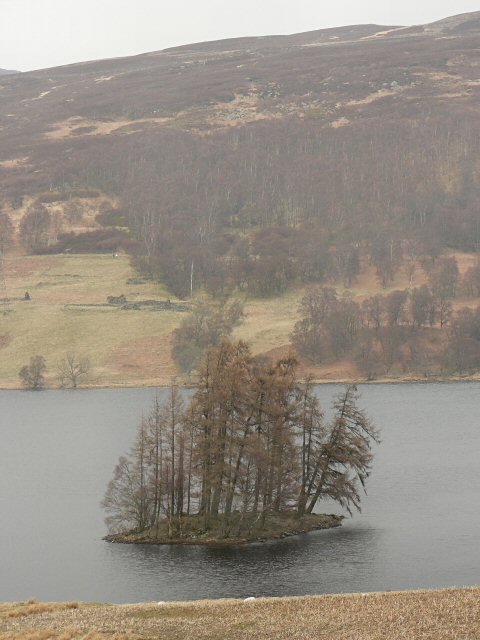
Crannog, Neolithic artificial island, found splattered across Ireland and Scotland in their hundreds. There is one in Wales too. Cryptoforests 1000 years after. Had prepared a post in which each picture had a source and a location, but Blogger ate the post and I can't be motivated to do it again. Therefore a quick roll call of sources: Scotland Places, Wikipedia, Graymonk, Education and Inchigeelach.

maandag 3 september 2012

We know nothing of untamed Nature

"We know nothing of untamed Nature, because our own landscape is entirely subject to our needs and desires. If it sometimes strikes us as untamed, it is either because in our forests, for instance its changes operate to a slower rhythm; or because as in the mountains the problems were of such complexity that Man has tackled them in detail rather than in one systematic assault. Such coherence as has resulted from these innumerable individual initiatives now seems to share the original primitive character of the mountain-world, whereas in fact it is due to an interlocking chain of decisions and enterprises, each of which seemed at the time to be independent of the others. Yet even the wildest of European landscapes has something of order and proportion about it. (Poussin was the incomparable interpreter of this.) Walk among our mountains and you will notice the contrast between forest and bare slope, the relation between the forest and the meadows below it: and the variety of expression which comes about as first one kind of vegetation, and then another, dominates the scene Travel in America, and you will realize that this sublime harmony, far from being the spontaneous expression of Nature herself, is the result of agreements long sought for between mankind and the site in question. What causes us to gape, in all simplicity, are the traces of our bygone enterprise. " - Claude Levi-Strauss.

vrijdag 24 augustus 2012

Novel ecosystems [the science behind cryptoforestry]


16 names have signed 'Novel ecosystems: theoretical and management aspects of the new ecological world order'. It's something of a manifesto arguing for a new approach within ecology to the newly emerging landscapes of the anthropocene. The image is from a 2009 article in Nature on novel ecosystems as Raggamuffin Earth.
Most of the world’s ecosystems are now impacted by humans to a greater or lesser extent, and humans thus play an important role in modifying or regulating the types and rates of ecosystem change. In addition, global trading has breached biogeographical boundaries and facilitated the spread of species into regions that they would probably never have reached under normal
conditions.

Novel ecosystems (also termed ‘emerging ecosystems’) have species compositions and relative abundances that have not occurred previously within a given biome. The key characteristics are  (1) novelty: new species combinations, with the potential for changes in ecosystem functioning; and  (2) human agency: ecosystems that are the result of deliberate or inadvertent human action, but do not depend on continued human intervention for their maintenance. Such ecosystems result from biotic response to human-induced abiotic conditions and/or novel biotic elements (e.g. land degradation, enrichment of soil fertility, introduction of invasive species). This includes the cessation of management of systems that have been managed or created by humans (e.g. agroforestry systems, pastoral land). New species combinations arise frequently in today’s world in conditions of strong direct or indirect human impact. In particular, there are three main reasons for their existence.
1 - Human impact has resulted in local extinction of most of the original animal, plant and microbial populations and/or the introduction of a suite of species not previously present in that biogeographical region.
2 - Predominating urban, cultivated or degraded landscapes around target ecosystems create dispersal barriers for many animal, plant and microbial species.
3 - Direct (e.g. removal of natural soil, dam construction, harvesting, pollution) and indirect (e.g. erosion due to lack of vegetation or overgrazing) human impact has resulted either in major changes in the abiotic environment or a decrease in the original propagule species pool, both of which can prevent the re-establishment of pre-existing species assemblages.
These types of ecosystem can be thought of as occupying a zone somewhere in the middle of the gradient between ‘natural’ or ‘wild’ ecosystems, on one hand, and intensively managed systems on the other hand.

vrijdag 3 augustus 2012

Quotes from Aldo Leopold

"The weeds in a city lot convey the same lesson as the redwoods; the farmer may see in his cow-pasture what may not be vouchsafed to the scientist adventuring in the South Seas." - Aldo Leopold.

Finally I read that classic of US nature writing: A Sand County Almanac (1949) by Aldo Leopold. It's a wonderful book that mixes slightly insane hyperbole, dreamy-yet-factual descriptions of place, remarkable ecological observations that are still urgent today. Invading species, the history of landscapes, the husbandry of wild species, the need to think like a mountain (that is seeing ecosystems rather than species), the place of top predators in nature, the dangers of tourism, the moral need for wildness. The concerns of Leopold are modern, his language is that of an antiquated American gentleman, formal but pleasant. Leopold is voice from a bygone age, his book I will reread.  

"Just as there is honor among thieves, so there is solidarity and cooperation among plant and animal pests. Where one pest is stopped by natural barriers, another arrives to breach the same wall by a new approach. In the end every region and every resource gets their quota of uninvited ecological guests."

dinsdag 29 mei 2012

Reviewing TheState, Volume 1


The State is a website and magazine based in Dubai. The State's first volume 'voicings/articulations/utterances' appeared about a month ago, it's in A4, black and white with a few pages in full colour, to be read not from left to right but from top to bottom with the binding held horizontal. The writing is of a consistent good quality and all writers aspire to write about what is happening in the world now in a language that is journalistic-academic, serious but without jargon. My favourite pieces are the personal reflections on identity, politics and the prospects of life to come. There is one awful piece which is by myself and deals with some of the finer points of cryptoforestry in a globalized world. From my perspective the best thing about The State is that it offers a collection of voices I would never have come in touch with otherwise: the main connection seems to be between India, the Gulf states and the United States, with people coming from one of those places and living in one of the others. I think that the overall mood of The State is one of insecurity. Most writers are of the student age or just beyond that, and you sense that the economical and political storms (the 2008 financial crash and its consequences, the Arab spring and Occupy) have created an atmosphere in which few people know what to expect other than the conviction that the future might not be as bright as was promised. And that this feeling is felt even stronger by younger people. I hope that the editors will live up to the aim expressed in the foreword and find a way to speak about the present in terms of daily life and easily observable phenomena.  
Amidst austerity measures today, we find ourselves increasingly precarious and pixelated; atomized, alienated, and irreparably glitched. Yet rather than attempt to definitively theorise, analyse, and explicate this contemporary situation, we found ourselves returning to these few questions: How do you speak a place? How do you speak from a place, or non-place? What might the reader expect to see from a certain region, and why? Who speaks, and in whose vernacular?   

zaterdag 12 mei 2012

After London, Wild England [the Victorian cryptoforest]


Richard Jefferies After London, Wild England was first published in 1880. This is after Butler's Erewon but before Morris' News from Nowhere and it sits in that class of Victorian dystopia's. If you have never heard of it, it's probably because it's not really worth anybodies time, the imagination and plot are sloppy, the telling is poor. Thematically this book has to be mentioned here as it describes England as a gigantic post-purge/post disaster cryptoforest where nature is retaking roads and buildings, where London has turned into a toxic swamp and where a retribalized population without technology tries to survive. Jefferies has some talent for evoking a landscape and I do like the first chapter where in annal style he describes the process of nature's reconquering in a way that I find mostly to be observably accurate, even in light of basic modern ecology. Is there any other book from that period that describes weeds so lovingly? So for future reference here is a long excerpt from the first chapter.

The old men say their fathers told them that soon after the fields were left to themselves a change began to be visible. It became green everywhere in the first spring, after London ended, so that all the country looked alike.

The meadows were green, and so was the rising wheat which had been sown, but which neither had nor would receive any further care. Such arable fields as had not been sown, but where the last stubble had been ploughed up, were overrun with couch-grass, and where the short stubble had not been ploughed, the weeds hid it. So that there was no place which was not more or less green; the footpaths were the greenest of all, for such is the nature of grass where it has once been trodden on, and by-and-by, as the summer came on, the former roads were thinly covered with the grass that had spread out from the margin.

In the autumn, as the meadows were not mown, the grass withered as it stood, falling this way and that, as the wind had blown it; the seeds dropped, and the bennets became a greyish-white, or, where the docks and sorrel were thick, a brownish-red. The wheat, after it had ripened, there being no one to reap it, also remained standing, and was eaten by clouds of sparrows, rooks, and pigeons, which flocked to it and were undisturbed, feasting at their pleasure. As the winter came on, the crops were beaten down by the storms, soaked with rain, and trodden upon by herds of animals.

Next summer the prostrate straw of the preceding year was concealed by the young green wheat and barley that sprang up from the grain sown by dropping from the ears, and by quantities of docks, thistles, oxeye daisies, and similar plants. This matted mass grew up through the bleached straw. Charlock, too, hid the rotting roots in the fields under a blaze of yellow flower. The young spring meadow-grass could scarcely push its way up through the long dead grass and bennets of the year previous, but docks and thistles, sorrel, wild carrots, and nettles, found no such difficulty.

Footpaths were concealed by the second year, but roads could be traced, though as green as the sward, and were still the best for walking, because the tangled wheat and weeds, and, in the meadows, the long grass, caught the feet of those who tried to pass through. Year by year the original crops of wheat, barley, oats, and beans asserted their presence by shooting up, but in gradually diminished force, as nettles and coarser plants, such as the wild parsnips, spread out into the fields from the ditches and choked them.

Aquatic grasses from the furrows and water-carriers extended in the meadows, and, with the rushes, helped to destroy or take the place of the former sweet herbage. Meanwhile, the brambles, which grew very fast, had pushed forward their prickly runners farther and farther from the hedges till they had now reached ten or fifteen yards. The briars had followed, and the hedges had widened to three or four times their first breadth, the fields being equally contracted. Starting from all sides at once, these brambles and briars in the course of about twenty years met in the centre of the largest fields.

Hawthorn bushes sprang up among them, and, protected by the briars and thorns from grazing animals, the suckers of elm-trees rose and flourished. Sapling ashes, oaks, sycamores, and horse-chestnuts, lifted their heads. Of old time the cattle would have eaten off the seed leaves with the grass so soon as they were out of the ground, but now most of the acorns that were dropped by birds, and the keys that were wafted by the wind, twirling as they floated, took root and grew into trees. By this time the brambles and briars had choked up and blocked the former roads, which were as impassable as the fields.

No fields, indeed, remained, for where the ground was dry, the thorns, briars, brambles, and saplings already mentioned filled the space, and these thickets and the young trees had converted most part of the country into an immense forest. Where the ground was naturally moist, and the drains had become choked with willow roots, which, when confined in tubes, grow into a mass like the brush of a fox, sedges and flags and rushes covered it. Thorn bushes were there, too, but not so tall; they were hung with lichen. Besides the flags and reeds, vast quantities of the tallest cow-parsnips or "gicks" rose five or six feet high, and the willow herb with its stout stem, almost as woody as a shrub, filled every approach.

By the thirtieth year there was not one single open place, the hills only excepted, where a man could walk, unless he followed the tracks of wild creatures or cut himself a path. The ditches, of course, had long since become full of leaves and dead branches, so that the water which should have run off down them stagnated, and presently spread out into the hollow places and by the corner of what had once been fields, forming marshes where the horsetails, flags, and sedges hid the water.

As no care was taken with the brooks, the hatches upon them gradually rotted, and the force of the winter rains carried away the weak timbers, flooding the lower grounds, which became swamps of larger size. The dams, too, were drilled by water-rats, and the streams percolating through, slowly increased the size of these tunnels till the structure burst, and the current swept on and added to the floods below. Mill-dams stood longer, but, as the ponds silted up, the current flowed round and even through the mill-houses, which, going by degrees to ruin, were in some cases undermined till they fell.

Everywhere the lower lands adjacent to the streams had become marshes, some of them extending for miles in a winding line, and occasionally spreading out to a mile in breadth. This was particularly the case where brooks and streams of some volume joined the rivers, which were also blocked and obstructed in their turn, and the two, overflowing, covered the country around; for the rivers brought down trees and branches, timbers floated from the shore, and all kinds of similar materials, which grounded in the shallows or caught against snags, and formed huge piles where there had been weirs.

Sometimes, after great rains, these piles swept away the timbers of the weir, driven by the irresistible power of the water, and then in its course the flood, carrying the balks before it like battering rams, cracked and split the bridges of solid stone which the ancients had built. These and the iron bridges likewise were overthrown, and presently quite disappeared, for the very foundations were covered with the sand and gravel silted up.

Thus, too, the sites of many villages and towns that anciently existed along the rivers, or on the lower lands adjoining, were concealed by the water and the mud it brought with it. The sedges and reeds that arose completed the work and left nothing visible, so that the mighty buildings of olden days were by these means utterly buried. And, as has been proved by those who have dug for treasures, in our time the very foundations are deep beneath the earth, and not to be got at for the water that oozes into the shafts that they have tried to sink through the sand and mud banks.

From an elevation, therefore, there was nothing visible but endless forest and marsh. On the level ground and plains the view was limited to a short distance, because of the thickets and the saplings which had now become young trees. The downs only were still partially open, yet it was not convenient to walk upon them except in the tracks of animals, because of the long grass which, being no more regularly grazed upon by sheep, as was once the case, grew thick and tangled. Furze, too, and heath covered the slopes, and in places vast quantities of fern. There had always been copses of fir and beech and nut-tree covers, and these increased and spread, while bramble, briar, and hawthorn extended around them.

By degrees the trees of the vale seemed as it were to invade and march up the hills, and, as we see in our time, in many places the downs are hidden altogether with a stunted kind of forest. But all the above happened in the time of the first generation.


maandag 12 maart 2012

Activities of the wild urban euro-woodlands

The Don of the fabulous Green Hermeticism blog pointed me to research on 'Wild urban woodlands' ages ago but only now have I managed to have a proper look. I think most of it deals with the controlled reforesting of abandoned landscapes (empty cities, decommissioned coal mines, etc). In a section on 'industrial fallow lands' as pedagogic challenges (the cryptoforest as a free school?) the following table is given. 


Dog walkers as an unrecognized class of urban explorers? 100 Lingerers? 152 Acts of adolescent activity (sex?)?? 33 Foraging acts (berries plus mushrooms)??? Seven arsonists???? One hunter, hunting for what????? & who can tell what somebody is up to?   

woensdag 7 maart 2012

Fuck Chernobyl [and all the other landscapes of the spectacle]

Picture source.
It is often falsely inferred that the cryptoforestry project must appreciate places like Chernobyl, the demilitarized zone between North and South Korea, depopulated Detroit and a range of other examples of landscapes abandoned after some social or environmental catastrophe.

On the face of it the Chernobyl forest that has taken over the city after the 1986 meltdown is the prime example of a cryptoforest; it is certainly feral, in limbo and unappreciated. But it fails to match one all-important criteria: its not here! In fact: it is way over there -> -> -> untouchable and ghost-like, distant and toxic. What the reactionary retro-kitch of Boing-Boing or that charlatan futurist Bruce Sterling, to name two reliable sources for disaster place pornography, are doing when they share their latest find is take your mind away from the nature and politics of your place and fill it with some hyper-inflated other space that has as nothing to do with the realities of daily life. 

The implied message of the spectacle landscape of Chernobyl glorified as a retweetable URL is that your own landscape is less historic, less exciting and less worthwhile: Chernobyl is the opium of the urban explorational classes.

Every second you spend drooling over Chernobyl picture sets on Flickr is a second that could have been more purposefully used exploring your own city or neighbourhood. 

maandag 19 december 2011

The Leshy [the forest is a mind game]


1) The word Leshy (or Leshi) describes both the Slavic Lord of the Forests and a multitude of woodland spirits who inhabit the Baltic forests. Their presence can be felt by everyone who is near. They are dangerous, evil or maybe just mischievous. Foresters say they are extremely thin, have skin and green hair. The Leshy prefer to live in the deep sections of the forest, they resent intruders and will try to lead them astray. They will cause a sense of bewilderment in the traveler's mind so he or she travels deeper into the forest getting hopelessly lost. In the winter the Leshy wipes away his footprint to prevent leaving a trail. Foresters say you always know when a Leshy is following you. The trees feel like they are moving, hemming you in; you get an sensation of being watched. The only way to escape from a Leshy (he moves faster than you) is to put your shoes and cloths on backwards. The Leshy, in effect, protects the forest. 

2) An image search reveals that (on shady sites I would otherwise never in my life have found (Russian military paraphernalia is not my fetish)) for a mere 100 bucks you can buy a Leshy sniper suit. The image above contains Leshy-clad sniper. Can you see him? The image right below contains two snipers, can you see them? If you are familiar with this blog you know I would normally give you the usual rant about how the forest is a psychological force that creates such creatures but you know what: a magic(k)al sniper is an apt modern translation of embodied primal fear in the forest. And that in a time when people are writing about new military urbanism (via John R.).  No cryptoforest should be without a Leshy but keep your AK-47 at home please. 


"The cut-leaf pattern will move in the wind, so reacts like real foliage, and it's deep enough to break up the outline very well indeed. It has a buff side too, which helps to break up the dark mass your quarry will see. The hood is generously cut to easily cover the head and the face veil, though solid to look at, allows good vision for the wearer. It can also be draped over the face/eye piece of the scope to give a bit more concealment. In tests I found the camo colouration a little dark for grassland, but the effect of the 3-D suit is very good indeed, as it does take away the biped look of the human form and replaces it with a non-specific shape." VIA