Inner City Reforestation in Utrecht and the G/Local Amazon; Psychogeography is involved.
donderdag 29 november 2012
Invasive species in NL
When rereading an old post on 'novel ecosystems' I wondered in what way statistics could illustrate the point of rapidly changing environments. The above graph shows the number of invasive vertebra, molluscs and lobsters. That the trend is toward acceleration is impossible to miss. I am looking for similar data on plants. There are an approximate 27.000 animal species in NL (2010 Data, graph on the right). The use of this is limited as presence of a specie and the frequency of a specie are two entirely different things.
The rising presence of invasive species happens against a decline in biodiversity:
The 2005 'Audit of non-native species in England' has the following table on introduction dates for invasive species. It does not seem to show the same pattern from the Dutch data.
woensdag 28 november 2012
Internalising space from a distance
With much zeal but little talent (the instructor implied I was fat, it took me some time before I realized I was wearing my left shoe on the right foot and vice versa) I have taken up wall climbing a few months ago.
These screenshots from Dutch TV program 'klokhuis' shows climbers at the Dutch championships lead climbing 'reading' the route to be climbed, a physical process that involves moving your hands into prospected future states (like reading with your finger) and projecting your body in imaginary positions. Internalising space from a distance. It happens that when I climb a route that looks new on the ground will suddenly come back to me when I am climbing it: my mind forgot it but my body remembers it.
There is a lot of creativity in route building. Sometimes you encounter a route that seems to be built around one interesting move. But the best routes are internally consistent and clearly show the builder trying to achieve a certain effect. With time I am expecting to recognize the hand of the maker in each climb.
Climbing a route is like taking an extremely intensive, condensed and abstracted city walk in an artificial landscape without views but with body-torquing-novelties and spectacular assemblages of jumps, turns, uncomfortable grips, deviations, distractions and sometimes a little redemption.
My favourite part of climbing is when I hit a hard or confusing part of a new route and must then try to figure out where to go next, testing different approaches, moving a hand here or a foot there to decide what is the way forward. In reality this is probably bad practise, the best climbers I have seen move with slow (almost slow-motion) deliberation, clean, efficient and precise. Climbing has to do with creativity, learning and knowing place and all those other cliché's of psychogeography.
When I began it never occurred to me that climbing is a sport (I was thinking of it more as something different to do with your body) and my body is being shocked out of decades of lethargy with lots of pain and suffering. Ouch.
donderdag 22 november 2012
The journal for the protection of all beings
"The journal for the protection of all beings" was published as the fall 1978 issue of Stewart Brand's CoEvolution Quaterly. The Journal was edited by Lawrence Ferlinghetti, Michael McLure, Gary Snyder (all present at the Six Gallery poetry reading that launched the Beats to the world) and David Meltzer. This publication therefore connects 50 years of West Coast experimentation from beat and anarchist Buddhism to the merry pranksters and early internet happenings. "The journal for the protection of all beings" takes a US Buddhist long view of death and destruction, from the Atom bomb and plutonium fear to the mass extinctions of biological species and human cultures. It brings together a fascinating range of material, a liberal sprinkling of poetry (it all reads great and actually works in the context), positional essays and a few very nice bits about the subjectivity of (linguistic, anthropological) field work. It shows the Beats not as a bunch of Benzedrine fuelled hobo hitch-hikers but as a serious,engaged and inclusive group of people working towards a sustained and coherent non-ideological critique of civilization. The journal is a fascinating document that is well structured and builds up nicely with each new contribution, but, despite myself, I can't really love it. It suffers from an overdose of Buddhist zeal, those poets are self-converted choir boys for a alien faith. Maybe I am missing something that would add a little concreteness to the meta-meaning this journal is hoping to generate bottom-up. Still: it's a thing to cherish and the Gary Snyder essay on Chinese poetry is a brilliant piece that I had not read before and which alone was well worth the 8 dollar the thing cost me on Ebay.
dinsdag 13 november 2012
Gramsci on 'the crisis'
"The crisis consists precisely in the fact that the old is dying and the new cannot be born; in this interregnum a great variety of morbid symptoms appear." Antonio Gramsci
You know, what a great quote, I really feel great about quoting it, it makes me feel so, you know, cynically chic with a twist of visionary sparkle, shaken not stirred, the James Bond of the underclass. But those morbid symptoms are not morbid, they are the hopefully monsters preparing the way, exploring the world, learning the possibilities of unplanned freedoms. They are the vernacular and I distrust the imperial of both the 'old' and the 'new'.
maandag 5 november 2012
The 2000 year old coppiced lime tree
Located in the Westonbirt Arboretum is a Lime tree that is over 2000 years old and that managed to reach its respectable age by a 25-year-coppice cycle. The picture above is all one tree. I Learned about this via Rob Penn's current BBC4 program Tales from the Wild Wood in which he takes under his care a neglected Welsh woodland.
zondag 28 oktober 2012
Plant circumnutation [plant growth trajectories with Mr Charles Darwin]
![]() | |
| Cassia corymbosa: A, plant during day; B, same plant at night. |
Charles Darwin is usually only known for his theoretical work (which arguable remain of some significance) but he was also an experimentalist who worked on barnacles and earthworms with meticulous care and for extended periods of time. Another subject he took on is the movement of plants. Below are trajectories of the circumnutation of various plants. Yes I needed to look that up as well: "cicumnation: The successive bowing or bending in different directions of the growing tip of the stem of many plants, especially seen in climbing plants." It looks neat though, like GPS tracks, and the accompanying explanations, like the following, add to the flavour. Who could have though that plants grow with such sense of exploration.
Brassica oleracea: circumnutation of radicle, traced on horizontal glass, from 9 A.M. Jan. 31st to 9 P.M. Feb. 2nd. Movement of bead at end of filament magnified about 40 times.
Brassica oleracea: conjoint circumnutation of the hypocotyl and cotyledons during 10 hours 45 minutes. Figure here reduced to one-half original scale.
Pinus pinaster: circumnutation of young leaf, traced from 11.45 A.M. July 31st to 8.20 A.M. Aug. 4th. At 7 A.M. Aug. 2nd the pot was moved an inch to one side, so that the tracing consists of two figures. Apex of leaf 14 1/2 inches from the vertical glass, so movements much magnified.
Sida rhombifolia: circumnutation and nyctitropic (or sleep) movements of a leaf on a young plant, 9 1/2 inches high; filament fixed to midrib of nearly full-grown leaf, 2 3/8 inches in length; movement traced under a sky-light. Apex of leaf 5 5/8 inches from the vertical glass, so diagram not greatly enlarged.
Averrhoa bilimbi: angular movements of a leaflet during its evening descent, when going to sleep. Temp. 78° - 81° F.
Oxalis carnosa: movements of flower-peduncle, traced on a vertical glass: A, epinastic downward movement; B, circumnutation whilst depending vertically; C, subsequent upward movement, due to apogeotropism and hyponasty combined.


zaterdag 27 oktober 2012
Three new drawings by my 4 1/2 year old
dinsdag 23 oktober 2012
Elephant trails as the highway of the hunter-gatherer
Human migration as a kind of elephant tourism? Actual hard evidence is maybe a bit wanting but Gary Haynes makes an interesting suggestion on how (prehistoric) hunter-gatherer are aided in their exploration of their environment by the landscape management of several elephantine species in past and present times. Read his papers 'Mammoth landscapes: good country for hunter-gatherers' and 'Elephant landscapes: human foragers in mammoths, mastodonts, and elephants'. For elephant trails as desire trails see earlier.
Studies of elephants in the wild show clearly that proboscideans make complex mental maps of water points, mineral sources, forage patches, fruit trees, travel routes, and socializing sites. My own studies confirm that travel routes between these important places can be effortlessly found by human foragers and other animal taxa. Proboscidean trails are well used, clearly identifiable, and easy to follow. They tend to be flat surfaced (because elephants have flat feet and great weight which compresses the ground so much), measure about 45 cm wide or more, and are consistently placed year to year. Human hunters or scavengers would have recognized these trails, read the signs to be found on them, and made use of them to track and follow vulnerable animals moving from water source to forage to cover to mineral licks and back again.
The modern literature on African and Asian elephants shows that they frequently move long distances, exploring for new forage, new mates, or new ranges. Proboscideans also habitually re-use old trails seasonally or more often, thus establishing clear networks of widely separated places connected by paths. Such networks of fixed and dependable trails would provide a means to encourage exploratory mobility by human pioneers into new ranges.
| Mineral pit dug by elephants |
maandag 15 oktober 2012
Pointing you to an important paper on edible wild plants
![]() |
| "lacto-fermented hogweed soup (+eggs): the original borscht" |
Wild plant species, even for agrarian peoples or pastoralists who mainly used animal products, would have assumed a special importance during times of crop failure and famine. Some of these are the species that we know of today as “weeds”: species well adapted to disturbed conditions and often associatedwith human habitation. In turn, some of these weeds became the candidates for domestication: for example, mustards, wild carrot, chicory and lettuce. Altogether, widely used domesticated species comprise only a fraction of the 20,000 or so plant species known to have been used as food by humans. Canadian Indigenous peoples alone have used over 500 species of plants for food. In recent times, however, especially in urban areas of the world, most people have come to depend on fewer and fewer species to provide them with their daily nutrition. Today, only around 20 domesticated species supply up to 85% of the world’s food base.What follows then is a ten page overview of selected edible wild plants from around the world as documented in scientific literature. That's an approximate 250 plants, way more than an average forage guidebooks will give you. The paper continues with various strategies for wild plant use and management before giving a very good definition of weeds, their downsides and upsides. It then continues by giving various examples of weeds used in local cuisines. I am quoting from the paragraph on Borsch:
Nowadays the Russian name borsh and Polish barszcz designate a kind of vegetable soup, specifically one made with beetroots (Beta vulgaris). However in the past this name applied mainly to a soup made from the young shoots of hogweed, or cow-parsnip (Heracleum sphondylium) which in Polish bears the name barszcz and in Russian barshchevnikh. How did it happen that this shift in the meaning of the name arose? This issue fascinated professor Jozef Rostafinski, a Polish botanist from Cracow, who in 1916 published a treatise on the history of the shift from eating Heracleum to eating beetroots. Hogweed is reported as an important food plant in Poland in the sixteenth century. In the herbal of Marcin z Urze¸dowa (1595) we can read: “Whoever eats hogweed, moistens his living.. . . When they make it sour in the Polish way, it is good to drink in fevers, thirst, as it alleviates thirst and cholera and it induces greed for food with its spice.. . . Garnished with egg and butter, it is good to eat on the days when they do not eat meat soup, as it works in the same way.”Isn't that lovely? The paper ends with the observation that the traditional knowledge of gathering wild plants is mostly down to old women whose skills are not being handed down to a new generation. And this is a shame because with it we lose a local, practical, hands-on knowledge that appreciates diversity and gives independence and understanding of the environment to its practitioners.
donderdag 11 oktober 2012
Strange Berlin 2nd hand bookshop grid map
In a TV documentary on Hendrik Lenstra, the Dutch mathematician, the man travels to Berlin to deliver the Euler lecture. His main concern in Berlin however seems to be to visit as many 2nd hand bookshops he can (he collects old book because they smell better than modern ones). He prepares his visit carefully by plotting shops on a map to find those hotshots where there are several shops in close proximity. They way he does this puzzles me though. As a mere mortal I would find all shops on a topographic map. Lenstra has a different technique: he creates a grid matching the Letters and Numbers from the map register (shop one in E13, shop two in F8 and so on) and then draws lines to connect the E and 13. The result, to me, looks a bit confusing.
vrijdag 5 oktober 2012
Crannog Cryptoforestry
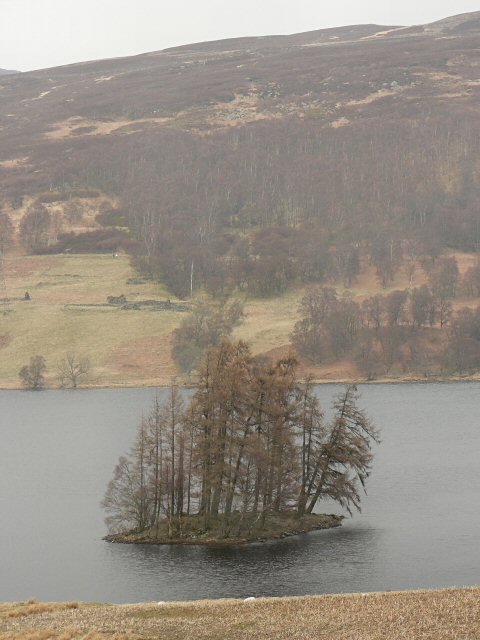
Crannog, Neolithic artificial island, found splattered across Ireland and Scotland in their hundreds. There is one in Wales too. Cryptoforests 1000 years after. Had prepared a post in which each picture had a source and a location, but Blogger ate the post and I can't be motivated to do it again. Therefore a quick roll call of sources: Scotland Places, Wikipedia, Graymonk, Education and Inchigeelach.
Labels:
crannog,
cryptoforestry,
islands,
neolithic,
uk
dinsdag 2 oktober 2012
Humanized monkey and wild Indians
zondag 30 september 2012
Amazonian garden dissected
In Charles C. Mann's '1493' (earlier) we find this glossed picture of an Amazonian garden in N.E. Brazil. It shows the detailed and intricate knowledge behind a good garden.
dinsdag 25 september 2012
Mehinaku cartography [mapping the Xingu]
The Mehinaku are an indigenous Amazonian people living in Xingu park. In his 1977 book 'The Mehinaku: The Drama of Daily Life in a Brazilian Indian Village' Thomas Gregor writes about them as if they were actors acting out their part. If life is a performance the village is a stage: "The Mehinaku village and its environs are a theatre for the enactment of everyday social relationships... The layout of the village and the architecture of the houses are simultaneously a spatial representation of Mehinaku social organization and a traffic pattern for the flow of information and interaction." If you say so! The images gives us something of everything: the village as a allusion to the cosmos, the mental map, the cognitive map, a cartoon and an areal picture. We are always happy when can store up on some more ethnocartographic imagery. Click to Enlarge.
| "A Mehinaku view of everyday village life. When Amairi painted this he occasionally stopped to chuckle over his characterization of a particular villager." |
maandag 24 september 2012
Plant: Wild or Not?
I discovered a plant in my street and a reader knew it's name: verbena bonariensis. The plant grew on its own in a small messy flowerbed but I have been noticing it everywhere as a garden plant. In fact it's probably the most fashionable plant of the season. However I have also discovered a few growing on a small untended plot overgrown with typical weedy species like primrose and blackberry, their distribution has the chaotic pattern of self-seeding. Wikipedia tells us that the purple top is native to South America and that it does spread with the wind. So what is the plant in my street? Is it wild (read escaped), planted or planted but forgotten by its gardener? Whatever the case: I am feeling all Gilbert White hot on the heels of a plant about to turn weed.
Abonneren op:
Posts (Atom)